Past performance breaks down exactly when you need it most.

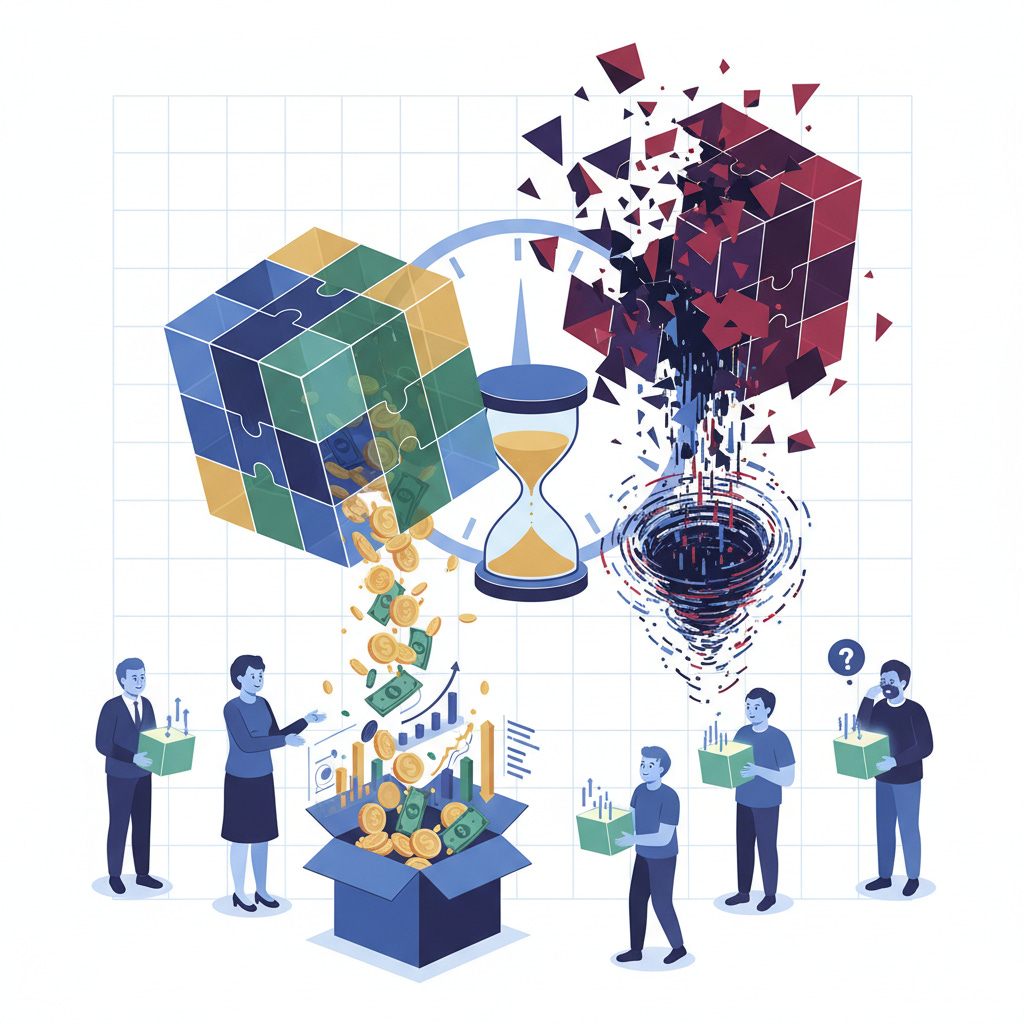
Consider the puzzle of Bernie Madoff's decades-long con. His early investors received exactly what they were promised—real money, impressive returns, verified results. From their perspective, demanding better evidence would seem almost irrational. What could be more convincing than actual cash in hand? Yet this seemingly bulletproof track record meant nothing when the underlying conditions shifted.
This captures something profound about how intelligence itself works, whether human or artificial. We build models of reality based on patterns we've observed, then use those patterns to navigate new situations. The process works brilliantly until the moment it doesn't—when the fundamental structure of the world changes in ways our experience never prepared us for. A new analysis suggests that our most advanced AI systems face this same vulnerability, excelling at tasks similar to their training while potentially failing catastrophically when conditions shift in unexpected ways.
The parallel runs deeper than mere analogy. Both Ponzi victims and AI systems rely on statistical reasoning—using past performance to predict future outcomes. Both can appear remarkably robust right up until the moment they encounter a type of change their experience never anticipated. The cruel irony is that the more successful the pattern matching has been historically, the more confident we become in its continued reliability.
The question isn't whether our models will eventually face conditions outside their training. The question is whether we'll recognize the shift before or after it breaks everything we thought we understood.
follow us for daily new insights